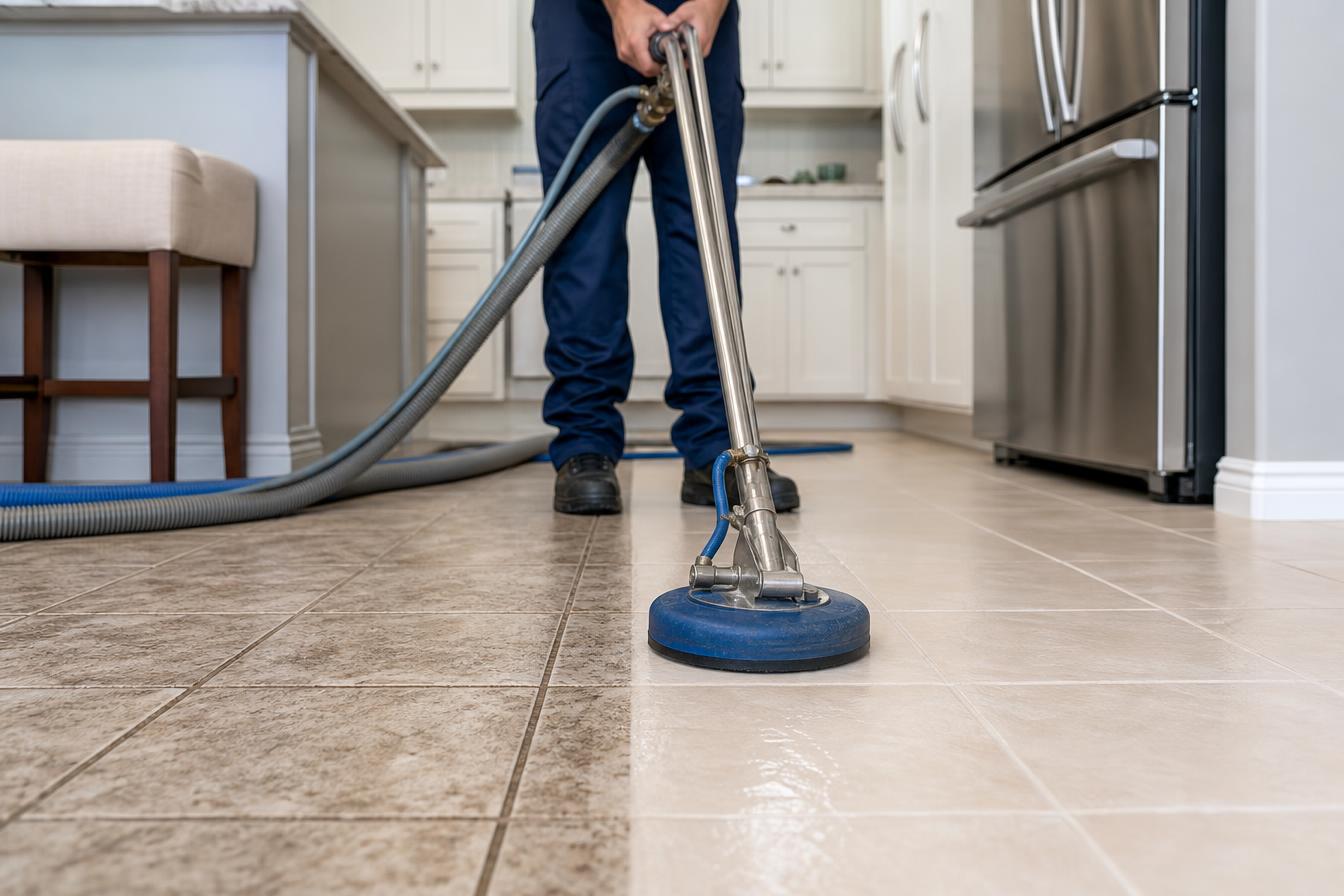
Grout is porous cement. Every mop pass pushes dirty water into those pores, where it dries and darkens the joint. That's why a mop can make grout look worse over time — you're essentially painting it with mop water.
What a spinner tool actually does
Our high-pressure spinner sprays hot water at ~1,200 PSI while a vacuum shroud immediately recovers the water — plus the loosened soil — before it touches your baseboards. The contained system means no splash, no mess, and roughly 10× the cleaning power of a scrub brush.
Alkaline pre-treatment
Most kitchen and entryway grime is oil-based. We apply a professional alkaline emulsifier and let it dwell so it breaks the bond between soil and grout. Pressurized rinse then flushes it out. On heavily stained grout, this single step is what makes it look new again.
Sealing — why and when
After cleaning, grout is more porous than ever because the old sealer is gone. A penetrating sealer (or a color-sealer for badly stained joints) fills the pores so future spills wipe up instead of soaking in. Sealer typically lasts 2–3 years in wet areas and 3–5 in dry areas.
Frequently asked
Will this work on natural stone?+
Yes, with adjusted pressure and pH-neutral chemistry. Travertine, slate, and marble each need specific handling — we identify the stone before starting.
Can old stains really come out?+
Most soil-based stains, yes. Dye stains (wine, hair color) or rust may require color-sealing to restore a uniform look.